A founder(Friend) once told me, “We’re going to win because our product is the most innovative in the market.”
I asked him, “What makes it innovative?”
He said, “We have features no one else has.”
I asked him, “Do your customers actually use those features?”
He went silent.
That’s the problem with how most founders think about innovation. They confuse “different” with “valuable.” They confuse “complicated” with “innovative.” They build features nobody asked for and call it innovation.
I’ve seen this pattern repeat itself dozens of times. Founders get so obsessed with their product that they forget to ask a simple question: “Is this actually creating value?”
I’ll let you in on a secret: The most successful startups I’ve worked with didn’t always have the most innovative products. What they had was a much sharper understanding of where innovation actually matters.
Let me explain what I mean.
The Innovation That Actually Matters
Here’s the thing I wish more founders understood: Innovation isn’t about being different. It’s about being more valuable.
There’s a huge difference.
A product that’s different but useless isn’t innovation. A product that solves a real problem in a simpler, cheaper, or faster way is innovation.
Take Flipkart. They didn’t invent e-commerce. But they did invent Cash on Delivery in India. That one innovation unlocked a billion-dollar market. It wasn’t about the product—it was about removing the biggest barrier to buying online.
Take Zerodha. They didn’t invent stock trading. But they did invent zero-brokerage trading in India. They completely disrupted an entire industry by asking a simple question: “Why are we charging so much?”
These companies didn’t innovate on the product. They innovated on everything else.
The Six Types of Innovation (And Why Most Founders Miss Five)
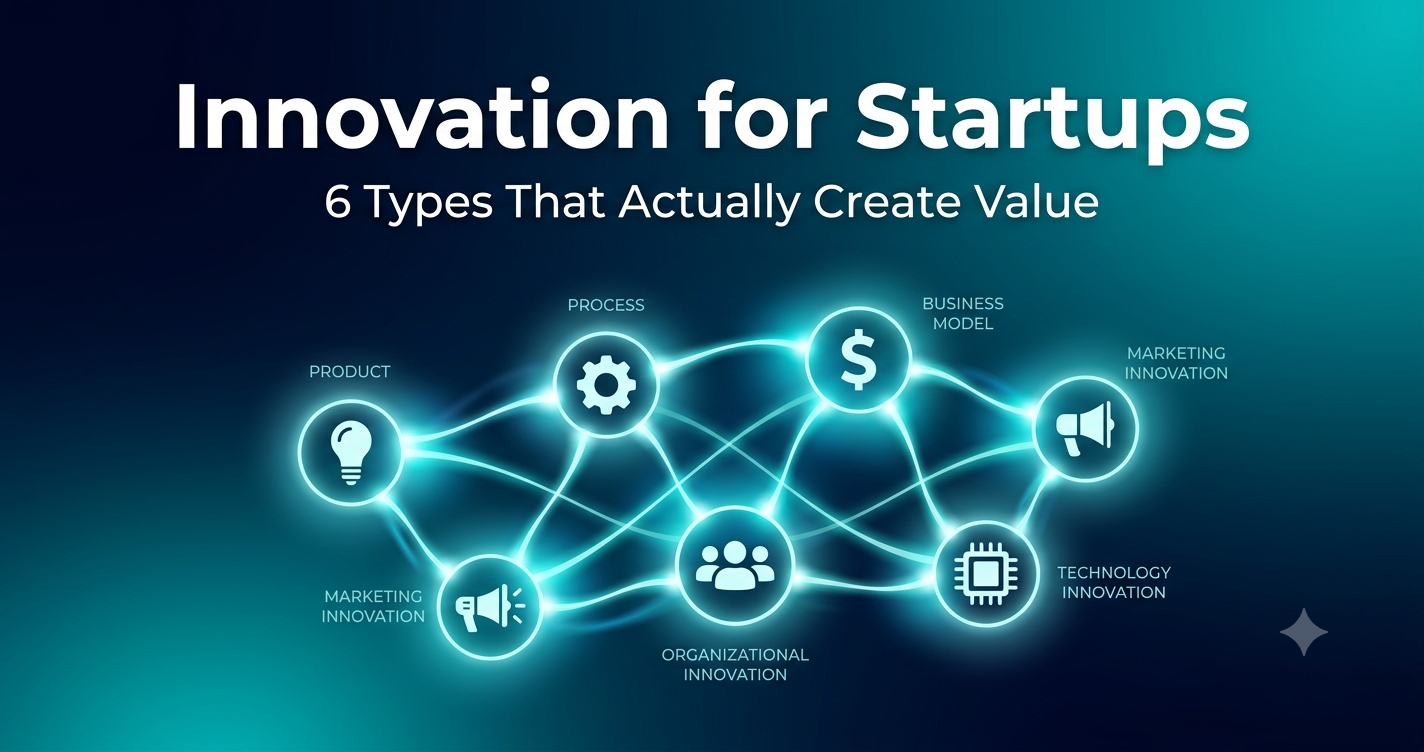
Innovation isn’t a single thing. It’s six different things. And most founders only focus on one.
1. Product Innovation — The One Everyone Thinks About
This is what most founders obsess over. They want to build something no one has ever seen before. I get it. It’s exciting. It’s glamorous. It’s what gets written about in the press.But here’s the reality: Product innovation is the hardest, most expensive, and most risky type of innovation. And it’s often not even the most valuable.
Example: Byju’s took traditional classroom learning and made it interactive and gamified. The product itself was a breakthrough. But here’s what people don’t talk about—the product took years to develop and millions to scale.
My advice? If you’re going to do product innovation, make sure the problem is worth solving. And don’t assume product innovation alone will save you.
2. Process Innovation — The One Most Founders Ignore
Process innovation is about doing things faster, cheaper, or better.It’s not glamorous. You won’t win awards for it. But it can be a massive competitive advantage.
Real example: Zoho built a software ecosystem that works seamlessly together. That doesn’t sound exciting, but it’s a huge differentiator. Businesses love Zoho because everything just works together. That’s process innovation.
I’ve seen founders struggle with this. They want to build the best product, but they don’t think about the process behind it. If you can deliver the same product at half the cost or twice the speed, you win.
3. Business Model Innovation — The One That Changes Everything
Business model innovation is about changing how you make money. This is where Zerodha excels. They didn’t invent stock trading—they reinvented how you pay for it. Zero brokerage. That one decision disrupted an entire industry.
Real example: Zerodha asked a simple question: “Why do we need to charge so much?” They didn’t just change the price—they changed the entire economics of the industry.
I’ve seen founders struggle with this because they assume the industry standard is the only way. It’s not. The industry standard is just what everyone else is doing. You don’t have to follow it.
4. Marketing Innovation — The One Most Founders Overlook
Marketing innovation is about finding new ways to reach customers.
Real example: Mamaearth didn’t invent natural skincare. But they did invent a new way to sell it—by building a community of “toxin-free” advocates and leveraging mom influencers.
Most founders think marketing is about spending money on ads. It’s not. It’s about finding a message that resonates with the right people.
5. Organizational Innovation — The One That Builds Companies That Last
Organizational innovation is about how you structure your company.
Real example: Freshworks built a culture of “customer obsession” from day one. That’s not just a buzzword—it’s a real commitment. Every employee is trained to think about the customer first.
I’ve seen founders get this wrong. They focus on the product and completely ignore the organization. But if you don’t build a culture that can scale, your product won’t save you.
6. Technology Innovation — The One That Gets Confused with Product Innovation
Technology innovation is about using new tech to solve an old problem.
Real example: CRED used technology to build a loyalty platform for credit card users. They didn’t invent the credit card—but they did invent a new way to use it.
Most founders confuse this with product innovation. But they’re different. Technology innovation is about the underlying tech. Product innovation is about the solution itself.
Why Most Founders Fail at Innovation
Here’s the problem: Founders try to innovate on everything at once.
They want a breakthrough product. A game-changing business model. A revolutionary marketing strategy. And they end up doing none of them well.
My advice? Pick one. Focus on it. Excel at it. And only then move to the next.
If you’re a seed-stage startup, your priority should be product-market fit, not innovation for its own sake.
What I’ve Learned Working with Founders
I’ve worked with dozens of founders over the years. The ones who succeed are the ones who understand that innovation is about creating value, not just being different.
Here’s what they do differently:
- They spend more time understanding the problem than building the solution.
- They’re willing to challenge industry norms.
- They focus on one type of innovation and do it well.
- They measure innovation by customer impact, not by how “cool” it is.
Final Thought
“The most successful founders don’t ask, ‘Is this innovative?’ They ask, ‘Does this create more value for the customer?'”
Written By
CA Roshan Jha
Founder, Startup Solutions 247
Chartered Accountant | Big4 Experience | Startup Advisor